
Get FaceCall on your phone
A better way to start a call.

FaceCall isn’t just an app. It’s the inevitable next step in telecommunications history that establishes a more transparent framework for how you communicate.
Voice calling has been stagnant and stale for decades, until now.
The first text-based identification. Just a name and a number.
Skype and other apps allow scheduled video meetings, but calling remains blind.
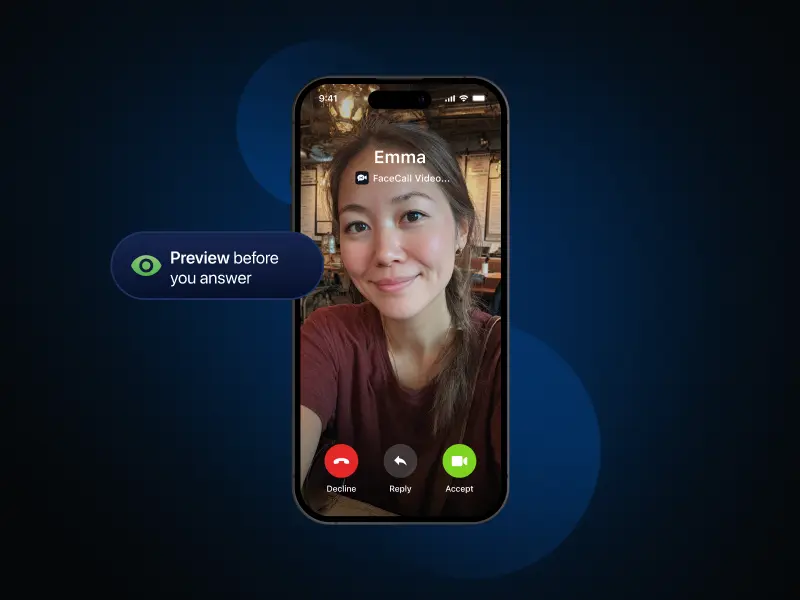
The first real-time video preview *before* the call is answered - where you get to know who’s calling for what purpose before you even pick up the phone.
For decades, the “Ringing” screen has been a black box. You see a name (maybe) and a number. You don’t know:
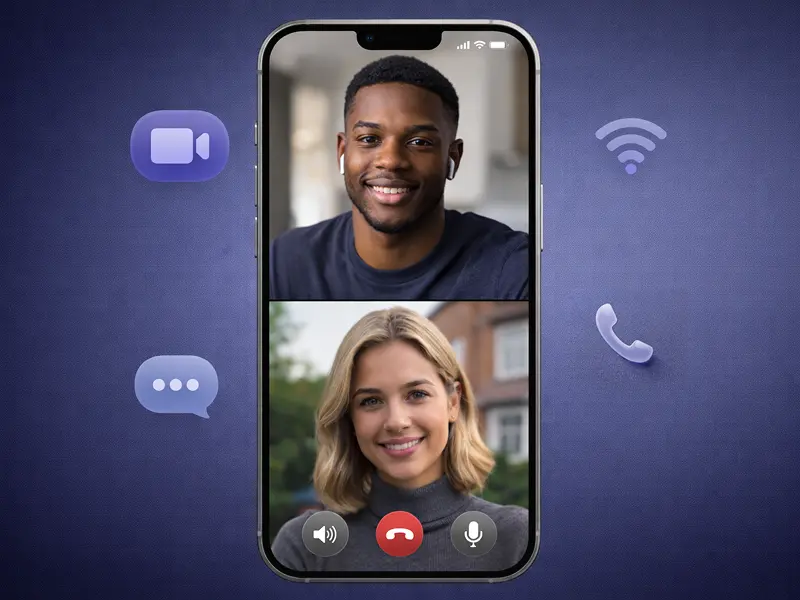
It is not a video call. It is context. It is the visual data layer that exists before the conversation begins.
A phone number can be spoofed. A live video feed cannot. You know exactly who is calling with biometric certainty.
What’s the reason they are calling? Does it immediately deserve your attention or can you skip it for now?
See where they are. At a concert? In a meeting? At home? The background gives you the context that words often miss.
Building a live video stream that initiates before a call is answered is incredibly difficult. It requires connecting two devices instantly, without draining battery, on varied network speeds.
We developed a proprietary Adaptive Handshake Protocol. It negotiates the connection in milliseconds and sends a highly compressed “Video Burst” packet that plays instantly on the receiver’s screen.
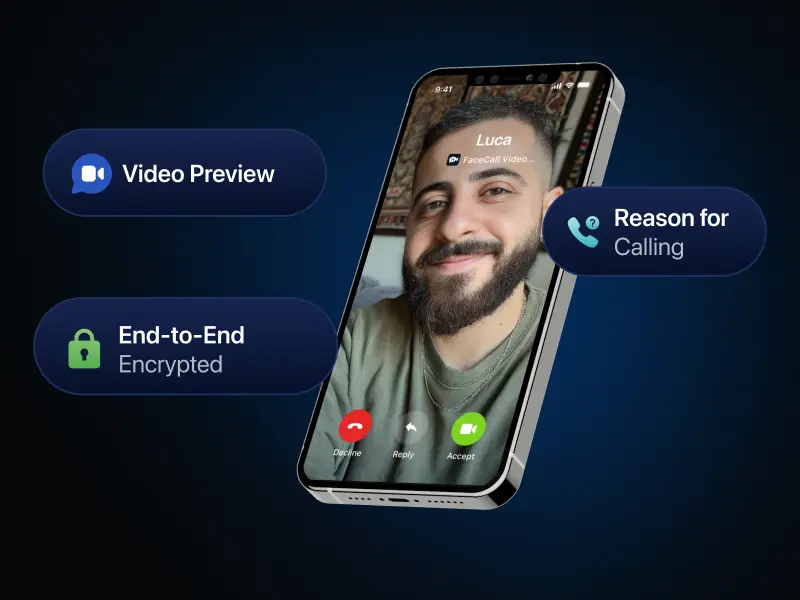
To make video appear instantly, traditional cloud servers are too slow. Light travels fast, but not fast enough when you are routing through a central server in Virginia while calling Tokyo.
FaceCall deployed a distributed Edge Network. This means that when you call, our protocol finds the geographically closest node to handshake the video, shaving milliseconds off the connection time.

The average phone call “rings” for 15 to 20 seconds before being answered or sent to voicemail. For 50 years, this has been dead time – just a repetitive sound playing in your ear.
FaceCall reclaims this lost time. We transform the “Ringing” phase into a High-Bandwidth Communication Window. Before you say “Hello,” you are already aware of why they are calling and whether you should pick it up.
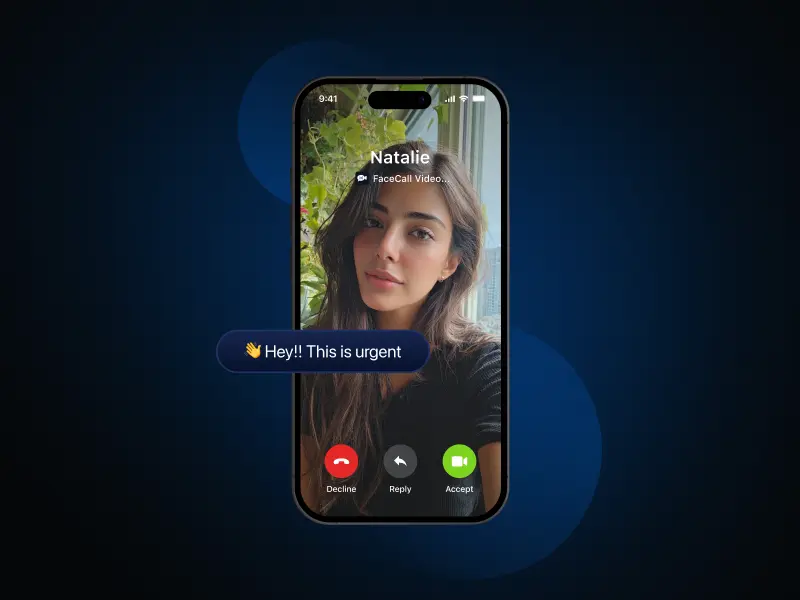
Most video calling apps are good, but only if you have an Android or an iPhone. FaceCall is the first Universal Video ID, which works natively on Android and integrates deeply with iOS CallKit.
Secure Calls
Countries
Latency
To Market
FaceCall adds context before the call begins.